If you follow more than one or two K-POP acts, July is the month that makes you feel like you're falling behind no matter what you do.
Here's how to actually keep up with a packed comeback season without burning out.
You don't need to watch every comeback live to be a real fan. The most sustainable approach is picking 2-3 tracking tools (not ten), ranking your artists by priority so you know where to spend limited time and energy, and accepting that catching up a few days late costs you nothing — streams, views, and chart placements accumulate over weeks, not just release day. This guide covers specific tools and a simple priority system to make a packed comeback month feel manageable instead of exhausting.
Why Comeback Season Always Feels Like This

aespa — "LEMONADE" Official MV (2026), one of many comebacks competing for attention this season · SM Entertainment · via YouTube
If it feels like every group you follow decided to release music in the same two-week window, that's not a coincidence you're imagining — it's a structural pattern in how the industry schedules releases. Summer months are consistently some of the busiest release windows of the year industry-wide, since agencies want new material out before major festival season, tour announcements, and year-end award consideration cycles. July 2026 alone has seen a wave of comebacks from idols across nearly every major agency landing within days of each other, which is exactly the kind of clustering that makes it feel impossible to give every release the attention it deserves.
Once you understand that this clustering is intentional and recurring — not a one-off scheduling accident — it becomes a lot easier to stop treating every busy month as a personal failure to keep up.
How to Actually Track Multiple Comebacks

RESCENE — "Love Attack" Official MV, a smaller-agency comeback that's easy to miss without a tracking system · 더뮤즈엔터테인먼트 · via YouTube
The single biggest mistake new fans make is trying to manually remember every release date across every group they like. That doesn't scale past two or three artists. Instead, pick a small number of tools that do the tracking for you:
Comeback Calendar Sites
Best for: seeing the whole month at onceDedicated K-POP comeback schedule sites aggregate confirmed release dates, times (usually listed in KST), and title track names across the entire industry in one running list. These are the fastest way to see what's dropping this week without checking a dozen individual social accounts.
Official Artist Channels
Best for: your top-priority groups onlyTurning on notifications for an artist's official YouTube channel or following their label's account directly (SMTOWN, BIGHIT MUSIC, etc.) guarantees you see teasers and MV drops the moment they're posted — but this only works if you limit it to the handful of acts you care most about, or your notifications become as overwhelming as the problem you're solving.
Fan Community Digests
Best for: catching things you'd otherwise missFan Twitter/X lists, Reddit comeback megathreads, and Discord servers built around comeback tracking tend to compile everything into single weekly or monthly roundup posts — useful as a backup layer to catch anything your other tools missed.
Building a Priority System (Without Guilt)
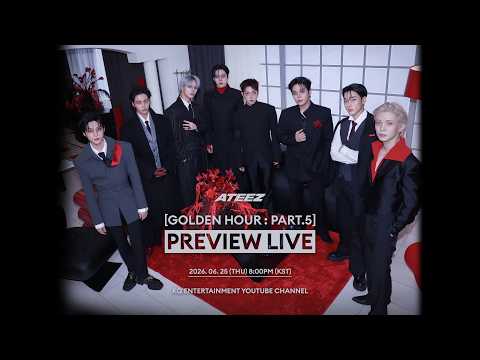
ATEEZ — "GOLDEN HOUR : Part.5" comeback (2026), another release landing in the same crowded stretch · KQ Entertainment · via YouTube
Once you're tracking everything, the next problem is deciding what actually deserves your time on release day versus what can wait. A simple three-tier system works better than trying to treat every comeback equally:
| Tier | What It Means | What You Do |
|---|---|---|
| Tier 1 | Your main group(s) — the acts you're genuinely invested in | Watch live if possible, stream day-of, engage with the comeback fully |
| Tier 2 | Groups you like but aren't deeply attached to | Watch the MV whenever you get to it — same day or a few days later, no difference |
| Tier 3 | Everything else you're mildly curious about | Catch it later via a monthly roundup or "best of the month" playlist — skip if you don't get to it |
The point of ranking isn't to make you feel bad about which groups matter less to you — it's to give yourself explicit permission to skip or delay the lower tiers without feeling like you're failing as a fan.
Signs You're Overextending, and What to Drop
A few signals that your comeback tracking has tipped from "engaged fan" into "unsustainable second job": you're setting alarms for multiple overlapping release times, you feel anxious about missing a live MV premiere for a group you only mildly follow, or you're streaming music you don't actually enjoy purely to support a chart placement. None of that is required to be a legitimate fan of anything.
If you notice any of that, the fix is almost always the same: drop your Tier 3 list entirely for a month, and see if you even miss it. Most fans find they don't.
Streaming numbers and view counts accumulate over the song's entire promotional cycle, not just the first 24 hours. Listening to a comeback three days late contributes just as much to an artist's long-term success as listening on release day — the "gotta stream immediately" pressure is mostly a fandom culture norm, not a technical requirement.
Comments
Post a Comment