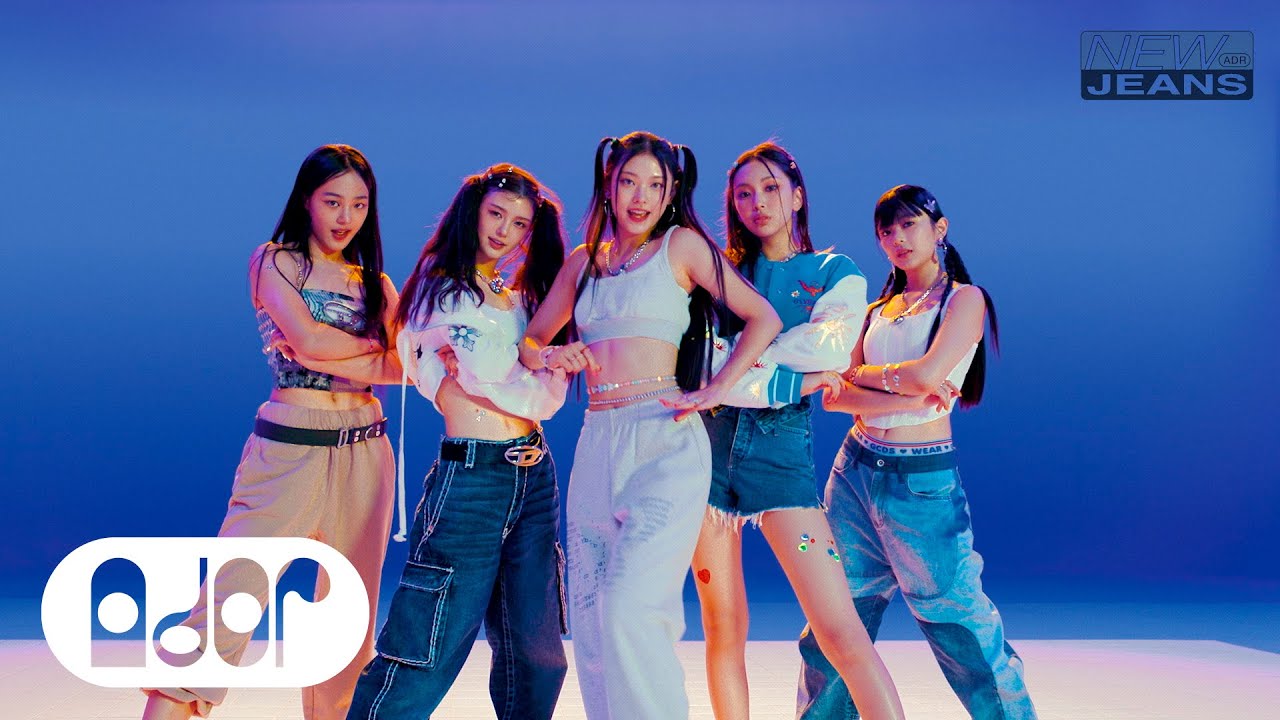
© NewJeans Official YouTube
K-POP organizes itself into generations — loosely defined eras that reflect shifts in sound, aesthetic, and industry structure. If you started listening to K-POP recently, you're entering during the 4th generation, which began around 2018–2019 and is still producing some of the genre's biggest acts.
The 4th gen is defined by a few things: more self-produced artists, heavier reliance on concept-driven identity, significantly larger international fanbases from debut, and a sound that pulls more freely from global genres — hip-hop, hyperpop, indie pop, and experimental electronic.
The Essential 4th Gen Groups
ATEEZ
Boy GroupDebuted 2018KQ EntertainmentATEEZ built one of the most devoted international fanbases in 4th gen K-POP through relentless touring and a theatrically intense performance style. Their sound blends cinematic orchestration with hard-hitting production — consistently one of the highest-energy live acts in the genre.
Start with: Fireworks, Fever, Halazia
Stray Kids
Boy GroupDebuted 2018JYP EntertainmentStray Kids are the most self-produced major 4th gen group — their in-house production unit 3RACHA writes and produces the majority of their music. Their sound is dense, layered, and deliberately abrasive in places. They've built a reputation as one of the most technically consistent live acts of the generation.
Start with: God's Menu, MIROH, Case 143
© Stray Kids Official YouTube
TXT (Tomorrow X Together)
Boy GroupDebuted 2019HYBETXT brought a more narrative-driven, emotionally complex approach to 4th gen boy group music. Their discography is built around interconnected storylines, and their sound ranges from bright indie-pop to heavier alt-rock influenced tracks. Strong crossover appeal with non-K-POP audiences.
Start with: Blue Hour, 0X1=LOVESONG, Chasing That Feeling
aespa
Girl GroupDebuted 2020SM Entertainmentaespa debuted with one of the most ambitious concepts in recent K-POP history — a lore-heavy universe involving digital avatars. Musically, they lean toward maximalist production with heavy bass and experimental structure. Supernova (2024) marked a turning point that pushed them to a new level of global recognition.
Start with: Next Level, Supernova, Black Mamba
NewJeans
Girl GroupDebuted 2022ADOR (HYBE)NewJeans arrived with a sound and aesthetic that felt genuinely different from what was happening in girl group K-POP — minimal production, Y2K-influenced visuals, and a deliberately understated performance style. Their first two EPs became some of the most-streamed K-POP releases of the era.
Start with: Hype Boy, Ditto, OMG
© aespa Official YouTube
IVE
Girl GroupDebuted 2021Starship EntertainmentIVE had one of the most commercially successful debut runs of any 4th gen girl group. Their music sits in a polished, confident pop lane with strong visual consistency. LOVE DIVE and After LIKE are among the most-streamed K-POP girl group songs of 2022–2023.
Start with: LOVE DIVE, After LIKE, Kitsch
(G)I-DLE
Girl GroupDebuted 2018Cube Entertainment(G)I-DLE is the most self-produced major 4th gen girl group — leader Soyeon writes and produces nearly all their music. Their sound shifts dramatically between releases, ranging from dark hip-hop to theatrical pop. Consistently one of the most critically distinctive groups in the generation.
Start with: TOMBOY, Queencard, Nxde
Quick Comparison
| Group | Type | Sound Profile | Best Entry Point |
|---|---|---|---|
| ATEEZ | Boy | Cinematic, high-energy | Fireworks |
| Stray Kids | Boy | Dense, self-produced | God's Menu |
| TXT | Boy | Narrative, alt-pop | Blue Hour |
| aespa | Girl | Maximalist, concept-heavy | Supernova |
| NewJeans | Girl | Minimal, Y2K-pop | Hype Boy |
| IVE | Girl | Polished pop | LOVE DIVE |
| (G)I-DLE | Girl | Self-produced, shifting | TOMBOY |
Frequently Asked Questions
What counts as "4th generation" exactly?
Is BTS 4th gen?
What about BLACKPINK?
Are there 5th gen groups already?
Comments
Post a Comment