If a new subunit debut has you newly curious about SUPER JUNIOR, here's the condensed version of how one of K-POP's foundational groups got to where it is now.
SUPER JUNIOR debuted on November 6, 2005 under SM Entertainment as a 12-member (later 13-member) group originally designed with a rotating, "always young" lineup concept — a plan that was scrapped almost immediately once the group became popular. Over 21 years, they've weathered member departures, staggered military service, and a rotating cast of subunits, and are still active today as a 9-member group marking their 20th anniversary in 2025 with the album "Super Junior25" and the Super Show 10 world tour.
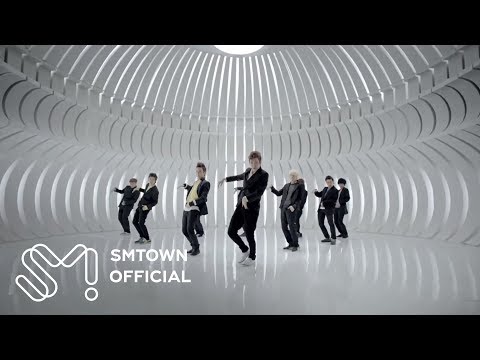
SUPER JUNIOR — "Mr. Simple" Official MV (2011) · SM Entertainment · via YouTube
2005: A Rotating Lineup That Never Rotated
SUPER JUNIOR debuted on November 6, 2005 on SBS's Inkigayo, performing "Twins (Knock Out)" from their debut album "Super Junior05" (later shortened to "Twins"). The name itself was designed around a specific gimmick: SM Entertainment originally intended the group as a rotational project, similar in spirit to Japan's idol "graduation" systems — older members would eventually move on to solo work, new members would rotate in each year, and the group would stay perpetually "junior" no matter how much time passed. The "05" in the original name literally meant "this is the 2005 lineup."
That plan lasted less than a year. After 13th member Kyuhyun joined in May 2006, SM scrapped the rotating concept entirely — the group had become popular enough, fast enough, that replacing members on a schedule no longer made business or fan sense. SUPER JUNIOR became a fixed, permanent lineup instead, and the rotational idea wouldn't resurface at SM until years later, in a very different form, with NCT.
2009: "Sorry, Sorry" and the Global Breakout
SUPER JUNIOR built steady popularity through the mid-2000s, but 2009's "Sorry, Sorry" is generally treated as the moment the group went from a strong domestic act to a genuine regional phenomenon. The song's music video eventually surpassed 100 million YouTube views, and the group's choreography and "SJ Funky" sound became one of the defining exports of the second wave of Hallyu. Follow-up hits like "Bonamana" and 2011's "Mr. Simple" cemented that run, with "Mr. Simple" debuting at No. 1 on Korea's Gaon Chart and topping Japan's Oricon Singles Chart during its release cycle.
2010s: Departures, Subunits, and Military Service
This is the decade that makes SUPER JUNIOR's lineup genuinely confusing for newer fans, so here's the short version. Founding Chinese member Han Geng left the group in 2011 following a contract dispute, and Kibum stepped away in 2015 after an extended hiatus. At the same time, SM leaned into SUPER JUNIOR's large membership by spinning off multiple subunits built around specific members or sounds — SUPER JUNIOR-K.R.Y. (ballads), SUPER JUNIOR-M (the Mandarin-language market), SUPER JUNIOR-T (trot), and SUPER JUNIOR-D&E (dance and hip-hop) all launched during this stretch, letting smaller groups of members promote independently of the full lineup.
Layered on top of all that: mandatory military service. Every able South Korean man must serve, and with nine-plus active members, SUPER JUNIOR has spent most of the 2010s and 2020s with at least one member enlisted at any given time — meaning "full group" comebacks have often meant whoever wasn't currently serving. Kangin, one of the original 12, eventually departed from the group in 2019 following a series of personal controversies.
2015: Label SJ and the 10th Anniversary
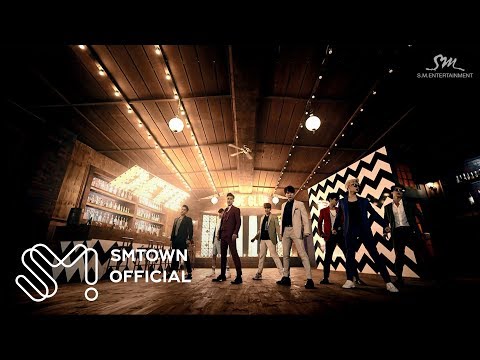
SUPER JUNIOR — "Devil" Official MV (2015), released for the group's 10th anniversary · SM Entertainment · via YouTube
On their exact 10th anniversary in November 2015, SM Entertainment gave SUPER JUNIOR their own dedicated management arm, Label SJ — a rare structural move at the time, since it meant the group had a management setup built specifically around them rather than sharing resources across SM's full roster. Earlier that year, the special anniversary album "Devil" marked vocalist Yesung's return from military service and doubled as a thank-you release to celebrate a decade of the fandom, known as E.L.F. ("Ever-Lasting Friends").
SUPER JUNIOR Today
9 Active Members · SM Entertainment / Label SJCurrent lineup: Leeteuk, Heechul, Yesung, Shindong, Eunhyuk, Siwon, Donghae, Ryeowook, Kyuhyun
- Sungmin, a founding member, amicably ended his exclusive contract with SM in April 2025 after 20 years to focus on a trot music career he'd already been pursuing solo
- The remaining nine members continue to promote as the group's active lineup
- Han Geng (2011), Kibum (2015), and Kangin (2019) departed at earlier points in the group's history
2025-2026: 20 Years, "Super Junior25," and 83z
SUPER JUNIOR marked their 20th debut anniversary in 2025 with "Super Junior25," their 12th full-length album, led by the title track "Express Mode." The album sold nearly 310,000 copies in its first week according to Hanteo Chart data — a career-high figure two decades into their run, which is a genuinely unusual trajectory for a group this far past debut. The anniversary celebrations continued with the "Super Show 10" world tour, kicking off at Seoul's KSPO Dome.
Which brings the story up to now: in 2026, Leeteuk and Heechul — both born in 1983 — launched SUPER JUNIOR-83z, a new two-member subunit built entirely around nostalgia and their shared birth year, debuting with the mini album "Promise" on July 13. It's the latest entry in a subunit tradition that stretches all the way back to 2006, and a reminder that after 21 years, SUPER JUNIOR is still finding new formats to keep the group's story going.
If you're trying to figure out which era of SUPER JUNIOR to start with, "Sorry, Sorry" (2009) is the essential historical reference point, "Mr. Simple" (2011) shows the group at its commercial peak, and "Super Junior25" (2025) shows where they've landed after two decades — all three sound genuinely different from each other.
Comments
Post a Comment